Smiling Sun, Nursery Embroidery
A Cheerful, Business-Ready Embroidery Design for Small Brands
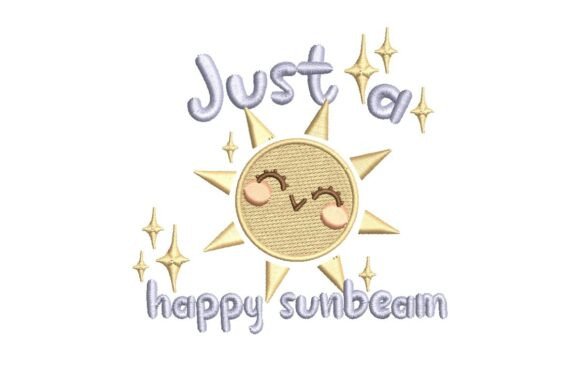
As an embroidery designer who’s digitized and stitched thousands of commercial designs for cafés, boutiques, florists, pet brands, and handmade studios, I approach every new machine embroidery design with two questions: “Does it translate professionally at scale?” and “Will it hold up—visually and physically—on real small business merch?” When I first saw Smiling Sun, Nursery Embroidery, the title and description—“Just a Happy Sunbeam Smiling Sun Design… Spread warmth and good vibes…”—immediately signaled its emotional intent. But emotion alone doesn’t sell merchandise. What matters is how this cheerful motif performs as an embroidered patch, a chest logo on staff aprons, a subtle cap front accent, or a joyful detail on tote bags and product packaging.
First Impression: Playful, Warm, and Surprisingly Versatile
Despite its nursery roots, Smiling Sun, Nursery Embroidery reads less “baby boutique” and more “handmade brand with heart.” Its visual personality is friendly without being childish, bold without being aggressive, and clean without sacrificing charm. That’s rare—and valuable. For a small bakery adding sun motifs to aprons, a florist embroidering caps for weekend markets, or a local pet brand stitching tote bags for adoption events, this design lands as warm, approachable, and authentically human. It avoids cliché while still delivering instant recognition: sunshine = positivity = trust. That emotional shorthand strengthens brand identity before a single word is read.
Real-World Performance Across Merch Categories
In practice, Smiling Sun, Nursery Embroidery shines where many cute designs falter: consistency across varied applications. As an embroidered patch, its rounded shape and balanced proportions hold well on twill, denim, and canvas—especially when backed with medium-weight cutaway stabilizer. On staff uniforms and custom apparel, it works beautifully at 2.5"–3.5" wide on chest placements or sleeve hems. Its smooth outer curve and clear facial features scale down cleanly for cap fronts (though avoid going under 2"), and its open negative space prevents stitch crowding on textured fabric like duck cloth or linen-blend aprons.
For tote bag design and boutique merchandise, the sun’s simplicity makes it ideal for repeat branding—think corner accents on reusable bags or stitched labels on handmade product packaging. It also integrates seamlessly into printable mockups, letting Etsy sellers and craft businesses preview how the design elevates their listings. And because it’s inherently uplifting, it boosts buyer engagement: customers remember how a product made them feel—not just what it is.
Where to Use It Thoughtfully
No design is universally bulletproof—and Smiling Sun, Nursery Embroidery is no exception. Exercise caution on highly curved surfaces (like deep-dome caps) unless you adjust underlay and reduce density. Avoid pushing it below 1.75" without testing: tiny eyes or smile curves may lose definition, especially on dark uniforms where thread color contrast becomes critical. High stitch density in the sun’s rays could cause puckering on lightweight knits or delicate fabrics—so always test on your actual garment base. Also, confirm that the original digital embroidery file includes clean jump stitches and minimal trims; excess trimming slows production and risks thread breaks during commercial embroidery runs.
Brand Impact Beyond Aesthetics
This isn’t just decoration—it’s strategic small business merch. When customers see the same smiling sun on a barista’s apron, a café’s tote bag, and a limited-edition gift tag, visual consistency builds familiarity and trust. That cohesion tells people: “This brand pays attention—to quality, to tone, to detail.” For handmade product sellers, it reinforces authenticity without shouting “handmade.” For service-based studios (yoga spaces, creative co-ops, wellness shops), it softens professionalism with warmth—making expertise feel accessible. And unlike trendy graphics that date quickly, this sun design carries timeless appeal, supporting long-term design assets reuse across seasons and product lines.
Practical Designer Notes Before You Stitch
Before committing to bulk production, here’s what I do—and recommend you do—with Smiling Sun, Nursery Embroidery:
- Test in black and white first: Assess clarity of shape and spacing without color distraction.
- Check small-patch viability: Resize to your smallest intended use (e.g., 1.8") and verify all elements remain legible.
- Review thread color contrast: Especially for dark fabrics—light yellow or cream suns pop best against navy, charcoal, or forest green.
- Inspect spacing and underlay: Ensure rays don’t crowd the face, and that inner curves have adequate fill support.
- Confirm hoop size compatibility: Does it fit comfortably in your standard hoops without re-hooping mid-stitch?
- Test on real fabric: Run a sample on your exact apron material, cap twill, or tote canvas—not just stabilizer swatches.
- Use proper stabilizer: Medium cutaway for woven fabrics; tear-away + topping for knits or napped surfaces.
- Create a client-ready mockup: Show how it looks stitched—not just placed—on final garments.
- Compare beside existing design assets: Does it harmonize with your logo, typography, and other embroidered elements?
- Confirm commercial licensing: Verify the embroidery file permits use on goods sold to end customers—especially for Etsy sellers and wholesale partners.
Remember: the strength of Smiling Sun, Nursery Embroidery lies not just in its smile—but in how reliably it delivers that warmth, stitch after stitch, across dozens of products, hundreds of garments, and countless customer interactions. Used intentionally, it’s more than a motif. It’s a quiet, consistent ambassador for your brand’s spirit.