Easter Embroidery Review for Small Business Merch
First Impression: Cheerful, Clear, and Commercially Ready
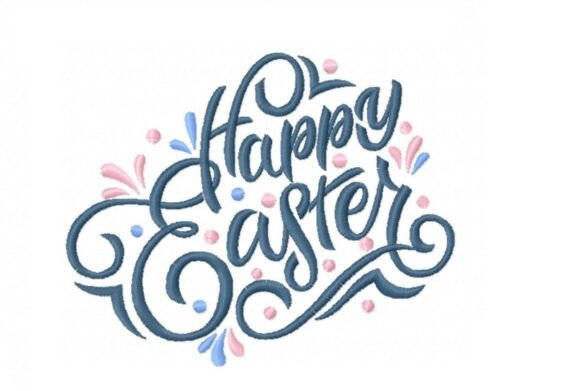
As an embroidery designer who’s developed hundreds of designs for small businesses—from neighborhood bakeries to indie florists—I opened Easter Embroidery expecting seasonal charm. What I found was a bright and festive machine embroidery design that lands squarely in the “friendly professional” zone: not overly cutesy, not stiffly formal—just warm, legible, and instantly recognizable as Easter. The phrase “Happy Easter” is central, clean, and balanced—no excessive flourishes or fragile script. That makes it highly adaptable for branded patch use, chest logos, sleeve accents, and tote bag marks without feeling like holiday clutter.
Real-World Performance Across Business Touchpoints
Easter Embroidery shines where small businesses need consistency and clarity: on staff aprons at a spring pop-up café, embroidered patches sewn onto reusable tote bags for a local boutique’s Easter gift set, or cap fronts for a pet brand’s seasonal event team. Its straightforward layout holds up well in custom apparel applications—especially when scaled between 2.5" and 4". On work shirts and uniforms, it reads clearly from across a room, reinforcing brand identity without overwhelming the garment.
For handmade product sellers on Etsy or craft fairs, this digital embroidery file works beautifully as a subtle yet intentional branding element—think corner embroidery on linen napkins, edge stitching on cotton tea towels, or centered placement on organic-cotton drawstring bags. It also translates smoothly into printable mockups for client presentations, helping boutique owners visualize how their seasonal merch will look before committing to production.
As an embroidered patch, Easter Embroidery offers strong visual weight and cohesion. When heat-sealed or sewn onto denim jackets or canvas aprons, it communicates celebration without sacrificing polish—a key differentiator for businesses aiming to balance handmade appeal with commercial credibility.
Where to Use It Thoughtfully (and Where to Pause)
While versatile, Easter Embroidery isn’t universally scalable. At under 1.75", letter spacing tightens and stitch density increases—risking fill distortion on textured fabric or reduced legibility on curved surfaces like cap fronts. If your small business plans to use it on structured caps, test a physical sample first: the curve can compress vertical elements and blur fine outlines.
Dark uniforms—especially deep navy or charcoal work shirts—require careful thread color selection. Since the product description doesn’t specify included thread colors, always review contrast options: pastel threads may fade visually on dark backgrounds, while high-contrast combos (e.g., white-on-navy or yellow-on-black) preserve readability and reinforce professionalism.
Frequent washing is another real-world factor. For aprons, tote bags, or staff uniforms exposed to daily laundering, confirm that the machine embroidery design uses stable satin and fill stitches—not delicate stem or outline-only treatments. Overly dense fills on small areas can stiffen fabric over time; if your version includes heavy underlay or tight stitch angles, consider simplifying for longevity.
How It Strengthens Brand Identity and Customer Trust
Small businesses thrive on authenticity and consistency—and Easter Embroidery supports both. Unlike generic clipart-style Easter graphics, its clean typography and balanced composition signal intentionality. That perception matters: customers associate well-executed embroidery with care, quality, and attention to detail—traits that directly boost perceived product value and buyer engagement.
When used across multiple touchpoints (e.g., matching apron embroidery + tote bag design + cap embroidery), it creates visual continuity that builds recognition. A florist using Easter Embroidery on staff aprons *and* customer gift totes reinforces seasonal messaging without repetition fatigue. Likewise, a bakery pairing it with custom packaging accents turns transactional moments into memorable, shareable experiences—ideal for social-driven small business merch.
Importantly, its cheerful tone aligns with springtime warmth without leaning into kitsch. That helps maintain brand integrity whether you’re a modern ceramic studio or a heritage pet brand—making it a rare holiday design that feels inclusive, not exclusionary.
Practical Designer Notes Before You Stitch
Before launching Easter Embroidery into production, run these checks:
- Test in black and white first—to assess contrast, spacing, and silhouette clarity without color distraction.
- Verify small-patch viability: resize to your target patch dimensions (e.g., 1.5"–2") and inspect letter separation and stitch flow.
- Review thread color contrast against your base fabric—especially on dark or textured materials like twill or canvas.
- Confirm hoop size compatibility with your embroidery machines; avoid assumptions about required hoop dimensions.
- Test on real fabric—not just stabilizer swatches—with your intended garment or patch backing.
- Choose stabilizer wisely: lightweight cutaway for stretchy knits, tear-away for stable wovens, and fusible for patch backings.
- Create a client-facing mockup early—using a printable mockup template—to secure sign-off before digitizing or stitching.
- Compare beside existing design assets: does it harmonize with your logo, fonts, and seasonal palette—or clash tonally?
- Confirm commercial licensing before use in paid merchandise, wholesale products, or resale items. Not all digital embroidery files include blanket commercial rights.
Remember: even a “bright and festive” design like Easter Embroidery earns its place in your small business merch lineup only when it performs reliably—across fabrics, sizes, and use cases. Treat it as a functional asset, not just decoration. That mindset separates forgettable seasonal accents from enduring brand-building tools.